
Academic Empowerment of Gifted Students: Investigating the Allelopathic Effect of Eucalyptus globulus Labill Extract in Different Cultures with the Addition of Hydrogel as a Water Source
Published 2026-07-01
Keywords
- chemistry education,
- inclusive practices,
- Phytotoxicity,
- Seed germination,
- Sustainable agriculture
Copyright (c) 2026 Orbital: The Electronic Journal of Chemistry

This work is licensed under a Creative Commons Attribution-NonCommercial-NoDerivatives 4.0 International License.
How to Cite



Abstract
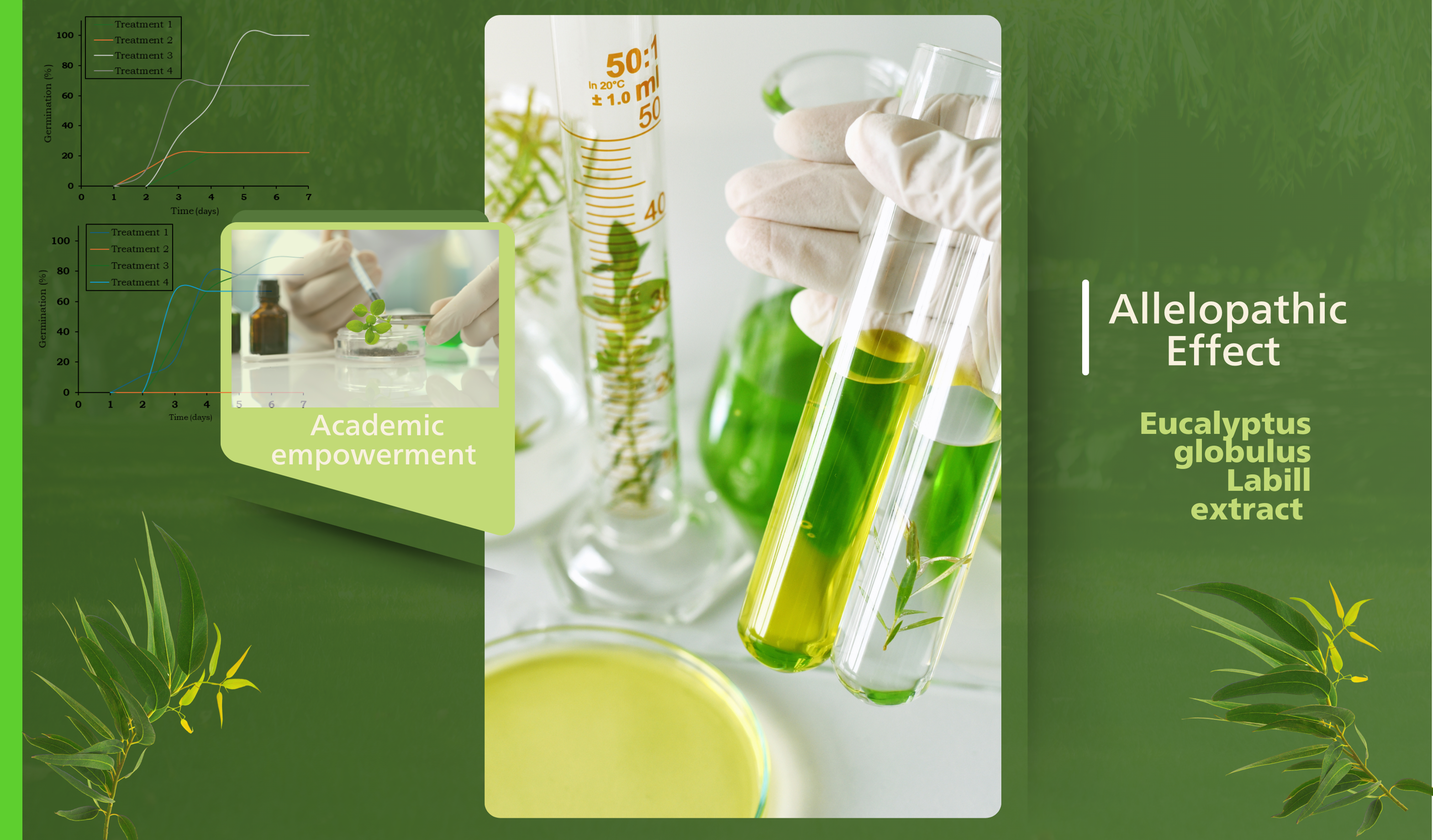
Student empowerment emphasizes enabling students to become protagonists in their learning process, fostering intellectual autonomy and growth. This approach is particularly crucial for gifted students to prevent academic disengagement. This study aimed to support the academic and scientific development of gifted students by investigating the allelopathic effects of an Eucalyptus globulus Labill aqueous extract on common-bean and radish crops, using a hydrogel as the primary water source. The germination assay was conducted in Petri dishes and evaluated across four different treatments over a period of seven days. The results demonstrated that the hydrogel combined with eucalyptus extract (1:13, gelatin:extract (w/w)) exerted an inhibitory effect on both crops, particularly on radish germination. Furthermore, analysis of key physiological indices revealed that the hydrogel treatment promoted rapid germination but resulted in an unbalanced initial growth pattern (low Dickson Quality Index; high Robustness Index). This research contributes to innovative pedagogical practices by demonstrating how authentic scientific inquiry empowers gifted students, fostering critical thinking and engagement in interdisciplinary areas. The findings highlight the potential of combining allelopathic compounds and hydrogels to promote sustainable agricultural practices, allowing students to actively explore innovative solutions focused on the dual functions of these components in crop management and water conservation.