
Density Functional Theory and Molecular Docking Investigation of Selected NSAIDs against COX-1 and COX-2 Enzymes: Study of Correlation Between Computational and Experimental Results
Published 2025-04-23
Keywords
- Aspirin,
- Anti-inflammatory,
- Cyclooxygenase enzyme,
- Molecular docking
How to Cite



Abstract
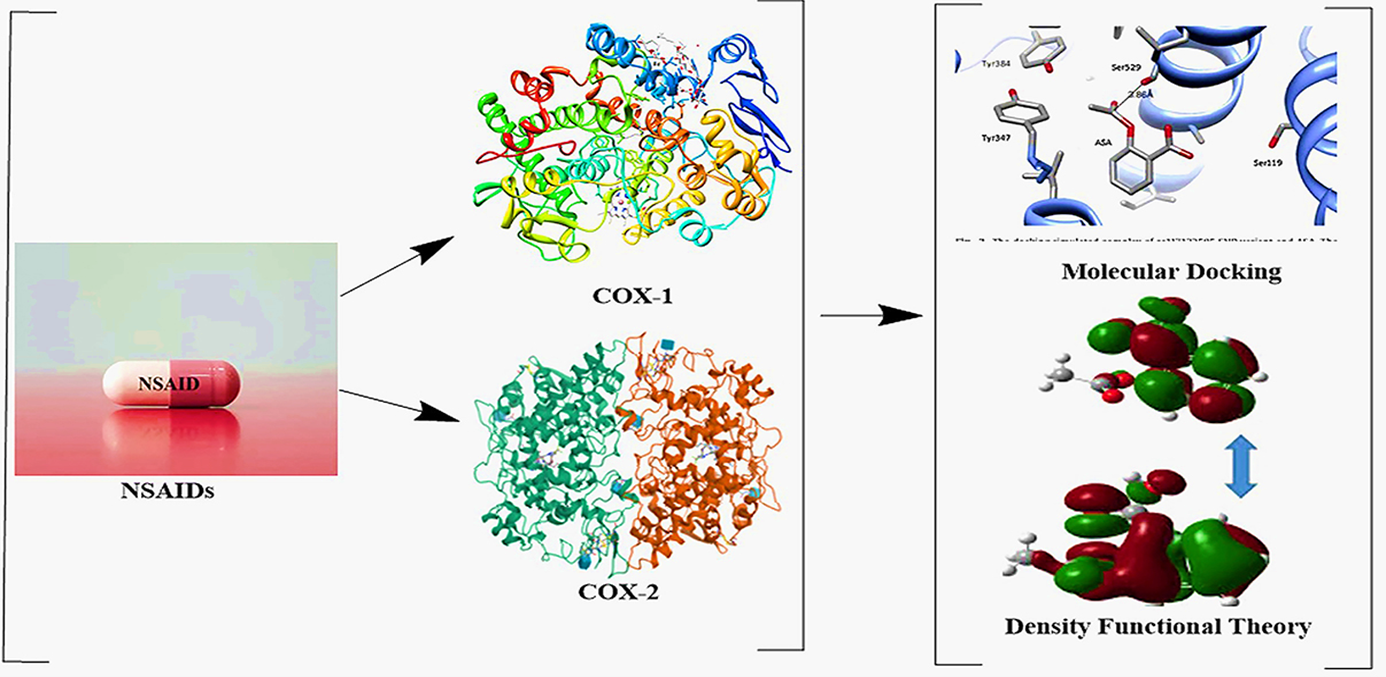
Research has been conducted to align computational and experimental results, enhancing the understanding of phenomena affordably and quickly. This study investigated the reliability of docking results for selected nonsteroidal anti-inflammatory drugs (NSAIDs) against cyclooxygenase (COX) proteins, compared to experimental findings from the literature. COX proteins causing inflammation were obtained from a protein data bank and prepared for docking analysis using Molecular Operating Environment (MOE) software. NSAIDs were also selected from the literature and docked to COX protein active sites, with binding affinities recorded. Density functional theory (DFT) analysis, using Becke's three-parameter hybrid model and Lee-Yang-Parr (B3LYP) approach, validated the docking results by examining the molecular properties of NSAIDs. Experimental IC50 data for COX inhibition by NSAIDs were compared with computational results, supported by DFT analysis. The study confirmed that computational results align with experimental data, supporting their use in drug development.