GENDER, INTERSECTIONALITY, AND SAME-SEX FAMILIES: CONTEMPORARY DEBATES AND PERSPECTIVES
DOI:
https://doi.org/10.55028/e77rr741Abstract
This article addresses same-sex families from the perspective of gender studies and intersectionality, aiming to understand the historical, social, cultural, and legal processes that have contributed to the recognition of these family configurations up to the present day. In this context, the research problem is centered on analyzing how gender theories and the intersectional approach make it possible to understand the challenges, forms of recognition, and processes of meaning-making experienced by same-sex families in a society still marked by patriarchal and heteronormative structures. The general objective is to analyze the main contributions of gender studies, intersectionality, and critical theories to the understanding of same-sex families and their social inclusion within. This is a qualitative bibliographic study based on authors from cultural, feminist, queer, and decolonial studies, as well as on the analysis of legal frameworks that guarantee rights to the LGBTQIAPN+ population. The results show that the social and legal transformations that have occurred in recent decades have significantly contributed to the recognition of same-sex families, although challenges related to discrimination, gender-based violence, and social exclusion still persist. It is concluded that gender studies and intersectionality constitute important analytical tools for understanding the multiple experiences lived by these families, fostering the construction of a more inclusive, democratic society committed to human rights and diversity.
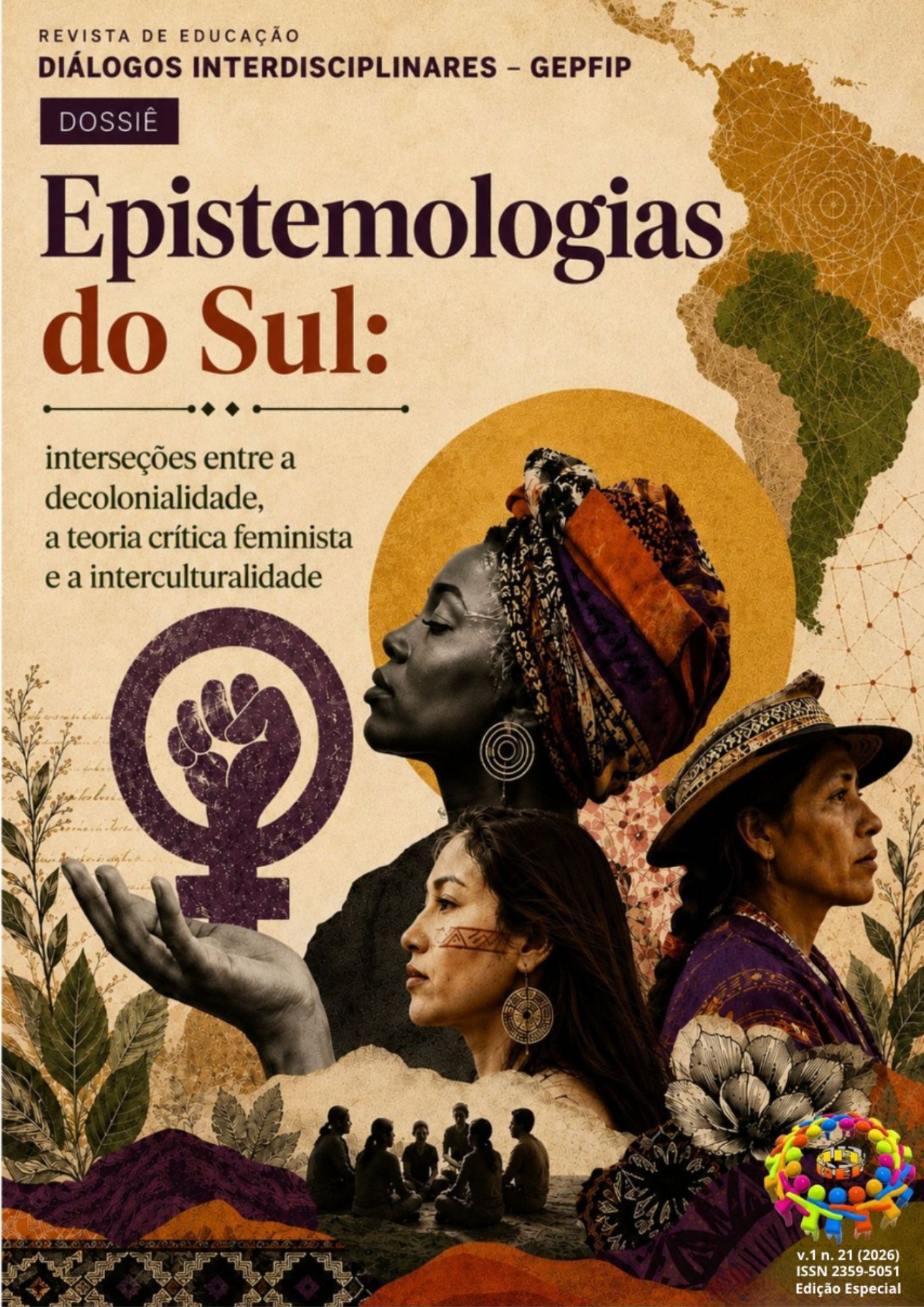
Downloads
Published
Issue
Section
License
Autores que publicam nesta revista concordam com os seguintes termos da Declaração de Direito Autoral da Revista Diálogos Interdisciplinares - GEPFIP:a) permitem a reprodução total dos textos, desde que se mencione a fonte.
b) mantêm os direitos autorais e concedem à revista o direito de primeira publicação, com o trabalho simultaneamente licenciado sob a Licença Creative Commons Atribuição-NãoComercial 4.0 Internacional;
c) autorizam licenciar a obra com uma Licença Creative Commons Atribuição-NãoComercial 4.0 Internacional que permite o compartilhamento do trabalho com reconhecimento da autoria e publicação inicial nesta revista;
d) responsabilizam-se pelas informações e pesquisas apresentadas nos textos a serem publicados na Revista Diálogos Interdisciplinares, eximindo a revista de qualquer responsabilidade legal sobre as opiniões, ideias e conceitos emitidos em seus textos;
e) comprometem-se em informar sobre a originalidade do trabalho, garantindo à editora-chefe que a contribuição é original e inédita e que não está em processo de avaliação em outra(s) revista(s), quer seja no formato impresso ou no eletrônico;
f) autorizam à Revista Diálogos Interdisciplinares efetuar, nos originais, alterações de ordem normativa, ortográfica e gramatical com vistas a manter o padrão normativo da língua e apresentarem o padrão de publicação científica, respeitando, contudo, o estilo dos autores e que os originais não serão devolvidos aos autores;
g) declaram que o artigo não possui conflitos de interesse.