
Post-treatment of Anaerobic Reactor Effluent by Double Filtration with Gravel and Clinoptilolite and Ozone Disinfection
Published 2021-10-05
Keywords
- clinoptilolite; double filtration; Post-treatment; ozone
How to Cite
Abstract
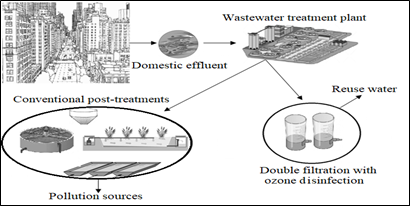
Anaerobic reactors are an excellent alternative in the treatment of domestic effluents. However, this system presents the disadvantage of requiring post-treatment. Many technologies have been studied and rapid filtration systems have proven to be a viable alternative for the post-treatment of anaerobic reactor effluents. This study evaluates the efficacy of an anaerobic reactor effluent post-treatment system using double filtration (DF), which consists of an upward gravel filter and a downward filter of clinoptilolite, and disinfection by ozonation. The system was evaluated using physicochemical and microbiological parameters. The lowest ozone dose (0.4 mg L-1) indicated possible oxidation of fractions of biodegradable organic matter with BOD removals above 95%. Higher ozone concentrations (5.0 and 7.0 mg L-1) improved COD removal and total nitrogen removal. Regarding microbiological parameters, over 87% E. coli and 89% total coliforms could be removed only with the use of DF, while total inactivation was observed using doses above 5.0 mg L-1 ozone. The results showed that following the proposed treatment, the effluent treated with the DF/Ozonation combination meets the guidelines for reuse in toilets, irrigation of orchards, cereals, pastures, and other crops through runoff or by punctual irrigation system according to the NBR 13969/97. According to these results, DF using clinoptilolite followed by ozonation is a promising technology for the anaerobic reactor effluent post-treatment.