
Analysis of Students' Misconceptions on Mole Concept Materials and Chemical Formula Using Four-Tier Multiple Choice Diagnostic Test Based Indonesian Curriculum
Published 2025-11-23
Keywords
- misconception,
- diagnostic test,
- four-tier multiple choice,
- mole concept,
- chemical formula
How to Cite



Abstract
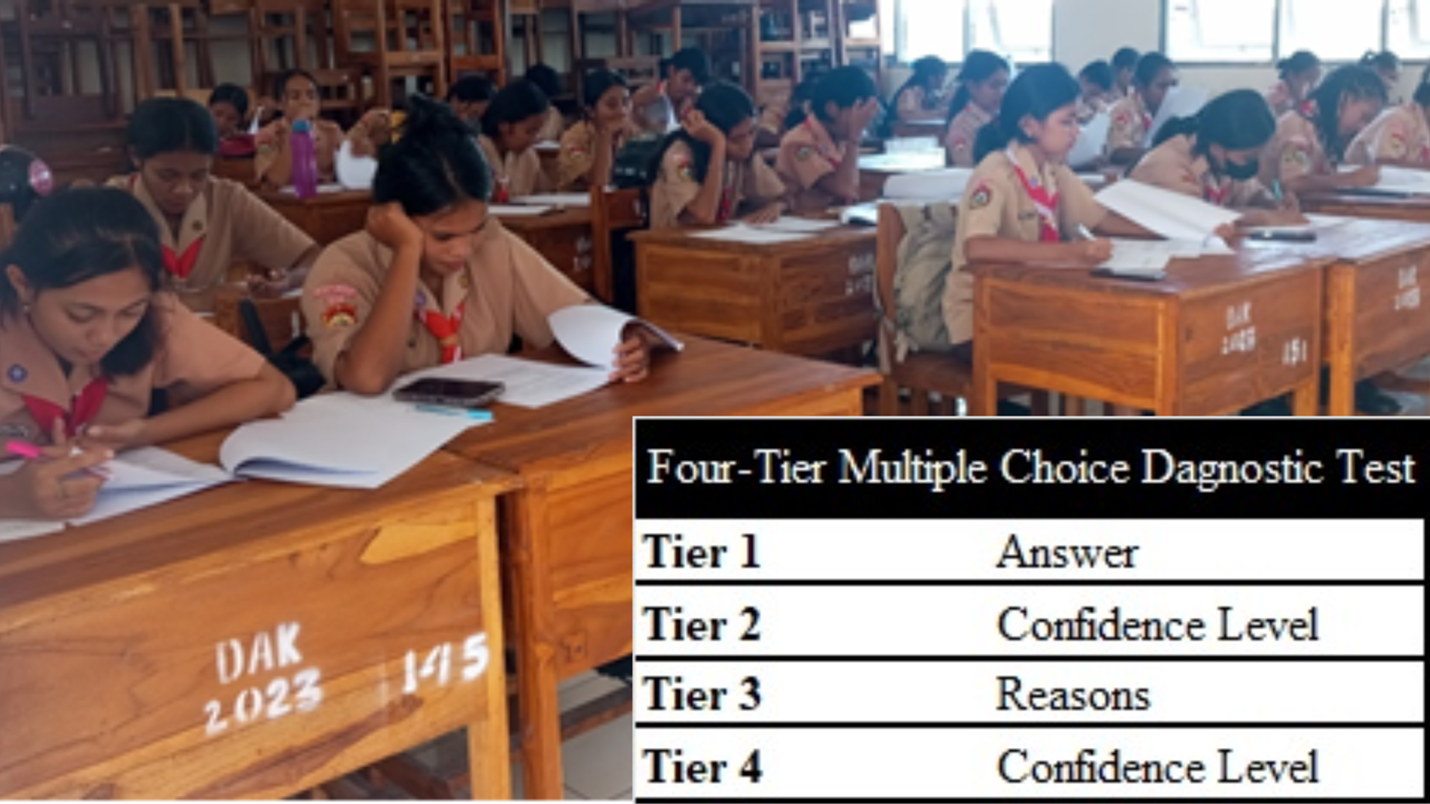
This research aims to determine the percentage level of students' misconceptions regarding the concept of moles and chemical formulas as well as each sub-concept where there are misconceptions and their causes in class XI-C SMA Negeri 5 Kupang. Misconceptions were measured using a four-tier diagnostic test instrument based on mixed method research with explanatory sequential design. The research sample was 32 students from class XI-C at SMAN 5 Kupang, who were determined using purposive sampling technique. Data collection techniques were carried out using a four-tier multiple choice diagnostic test, interview guide questionnaire and documentation. Based on the research results, the misconceptions that occur in class XI-C students at SMAN 5 Kupang are classified as moderate misconceptions with a percentage of 41.56%. Significant misconceptions were identified in 5 sub-concepts with an average CR (confidence rating) score above 4.00, namely: (1) Relative Atomic Mass and Relative Molecular Mass 18.75%; (2) Calculation of Mole Concept 24.99%; (3) Reaction Equalization 21.87%; (4) Empirical Formula and Molecular Formula 18.75%; (5) Hydrate Compound 23.43%. Students' misconceptions are caused by 5 factors based on questionnaire and interview data, namely: (1) Students 35.416%; (2) Teachers 6.25%; (3) Learning methods 25.78%; (4) Teaching context 13.125%; (5) Textbooks 20%.