
Unpayable debt
uma crítica feminista, racial e anticolonial do capitalismo
DOI:
https://doi.org/10.46401/arec.2025.v17.24266Keywords:
black feminism, anticolonial critic, black epistemology, capitalism , coloniality, racialityAbstract
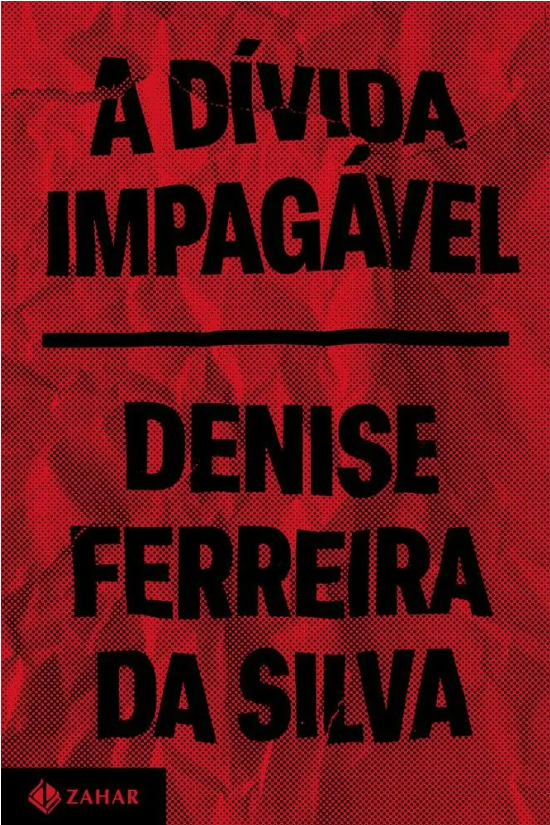
In The Unpayable Debt, Denise Ferreira da Silva presents a critique of modern capitalism, articulating a feminist, racial and anticolonial perspective. The author dismantles the logic of Western modernity, revealing how raciality is a structural and permanent element of the capitalist system, not an exception or historical accident. The work consists of four essays that expose the epistemological violence of modernity, criticizing its fundamental principles (separability, determinability, and sequentiality) that sustain practices of racial domination, such as slavery and colonialism. Denise uses the concept of the "wounded captive body" to illustrate the paradoxical condition of racialized bodies, which are simultaneously treated as commodities and human beings. Inspired by the narrative of Octavia Butler's novel Kindred, the author explains the idea of the unpayable debt as a historical and ethical obligation that falls on current generations, even if they did not create this debt. This debt is impossible to repay within the parameters of modern justice, which is based on categories of value and property incompatible with the Black experience. Beyond philosophical critique, Denise Ferreira da Silva proposes Black feminist poetics as a method to imagine other forms of existence and justice that break with the logic of appropriation and capital. Her work is an essential read to understand the intersections between capitalism, racism and coloniality.
Downloads
References
BUTLER, Judith. Desfazendo o gênero. Tradução de Renato Aguiar. Rio de Janeiro: Civilização Brasileira, 2004.
BUTLER, Octavia. Kindred. Boston: Beacon Press, 1979.
DESCARTES, René. Meditações metafísicas (1641). Tradução de Homero Santiago. São Paulo: WMF Martins Fontes, 2009.
FERREIRA DA SILVA, Denise. A dívida impagável. Tradução de Jamille Pinheiro Dias. São Paulo: Oficina da Imagem; Instituto Tomie Ohtake, 2019.
SILVA, Denise Ferreira da. A dívida impagável: uma crítica feminista, racial e anticolonial do capitalismo. 1ª ed. Rio de Janeiro: Zahar, 2024.
HARTMAN, Saidiya. Scenes of subjection: terror, slavery, and self-making in nineteenth-century America. New York: Oxford University Press, 1997.
HARTMAN, Saidiya. Venus in two acts. Small Axe, v. 12, n. 2, p. 1-14, 2008. DOI: https://doi.org/10.1215/-12-2-1
HARAWAY, Donna. Simians, cyborgs, and women: the reinvention of nature. New York: Routledge, 1991.
HARAWAY, Donna. Staying with the trouble: making kin in the Chthulucene. Durham: Duke University Press, 2016. DOI: https://doi.org/10.2307/j.ctv11cw25q
HEGEL, G. W. F. Fenomenologia do espírito. Tradução de Paulo Meneses. Petrópolis: Vozes, 1992 [1807].
KANT, Immanuel. Crítica da razão pura. Tradução de Valerio Rohden e Udo Baldur Moosburger. São Paulo: Nova Cultural, 1999 [1781].
MARX, Karl. Para a crítica da economia política. Tradução de Edgard Malagodi. São Paulo: Abril Cultural, 1982.
MARX, Karl. O capital: crítica da economia política. Livro I. Tradução de Rubens Enderle. São Paulo: Boitempo, 2013.
MARX, Karl. O capital: crítica da economia política. Livro II. Tradução de Rubens Enderle. São Paulo: Boitempo, 2014.
MARX, Karl. O capital: crítica da economia política. Livro III. Tradução de Rubens Enderle. São Paulo: Boitempo, 2017.
MBEMBE, Achille. Necropolítica. Revista Arte & Ensaios, n. 32, p. 123-151, 2016 [original em francês: Nécropolitique, 2003.
SPILLERS, Hortense J. Mama’s baby, papa’s maybe: an American grammar book. Diacritics, v. 17, n. 2, p. 64-81, 1987. DOI: https://doi.org/10.2307/464747
WYNTER, Sylvia. Unsettling the coloniality of being/power/truth/freedom: towards the human, after man, its overrepresentation – an argument. CR: The New Centennial Review, v. 3, n. 3, p. 257-337, 2003. DOI: https://doi.org/10.1353/ncr.2004.0015
Downloads
Published
Issue
Section
License
Copyright (c) 2026 Albuquerque (online)

This work is licensed under a Creative Commons Attribution-NonCommercial-NoDerivatives 4.0 International License.
The copyrights are all granted to the journal. The articles whose authors are identified represent the expressed opinion of its authors and not the official position of the Albuquerque: journal of Cultural Studies.
How to Cite





1.png)