Introduction - The End of Humor?
Laughter Under Threat Throughout History
DOI:
https://doi.org/10.46401/arec.2025.v17.25578Keywords:
humor, history, languagesAbstract
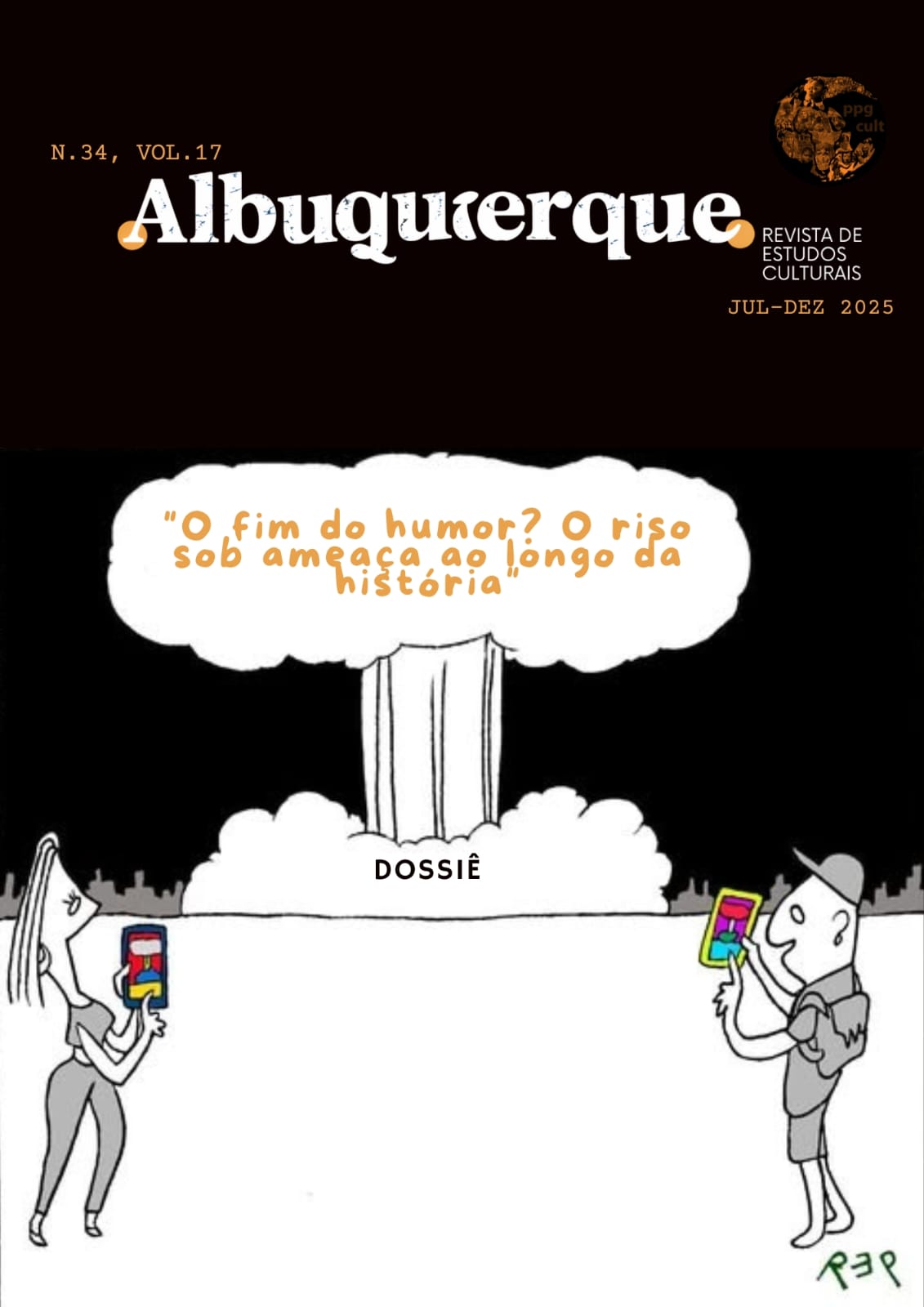
Historically, humor has played a vital role in times of crisis, serving as a refuge of lucidity and a mechanism of resistance against persecution and oppression. In authoritarian regimes such as Nazi Germany and the Soviet Union, laughter endured as a form of social critique and defense of freedom, proving essential for preserving sanity and encouraging independent thought. Today, scholars continue to emphasize its relevance: humor fosters doubt, the foundation of critical thinking, and strengthens liberty. Yet, the relationship between humor and freedom is complex, since the “enemies of laughter” are not only external but also internal, rooted in our own fears. In this context, self‑critical humor—expressed through satire, irony — emerges as a powerful tool to confront these fears and reconcile laughter with ethics and freedom. Inspired by Amos Oz’s remark that fanatics lack humor, the dossier questions whether we are approaching the end of laughter. In a world marked by wars, assaults on democracy, extreme polarization, environmental crisis, and uncertainty, humor remains indispensable as a means of coping and reflection. The dossier brings together researchers from diverse fields to deepen the debate on humorous representations and their social connections, exploring humor’s role as resistance and critique in times of global crisis.
Downloads
References
BARDON, Adrian. The Philosophy of Humor. In: CHARNEY, Maurice (ed.). Comedy: a geographic and historical guide. Connecticut: Greenwood Press, 2005.
MILNER DAVIS, Jessica. Taking humour and laughter seriously: the multi-disciplinary field of humour studies. Journal & Proceedings of the Royal Society of New South Wales, [s. l.], v. 154, pt. 2, p. 182-200, 2021.
Downloads
Published
Issue
Section
License
Copyright (c) 2026 Albuquerque (online)

This work is licensed under a Creative Commons Attribution-NonCommercial-NoDerivatives 4.0 International License.
The copyrights are all granted to the journal. The articles whose authors are identified represent the expressed opinion of its authors and not the official position of the Albuquerque: journal of Cultural Studies.
How to Cite





1.png)